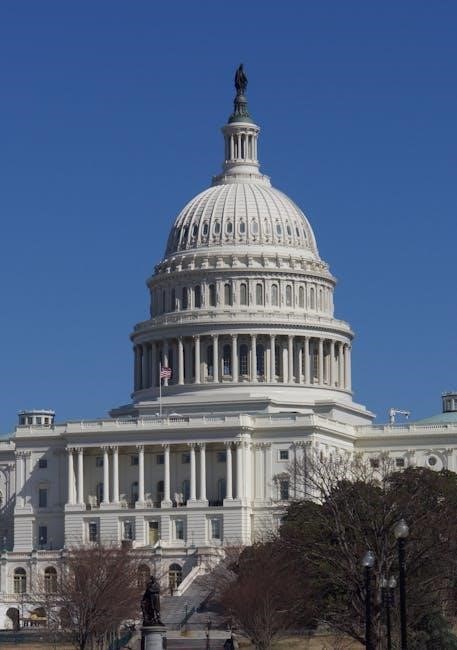
“The Logic of American Politics” (10th Edition) offers a comprehensive exploration of the U.S. political landscape, delving into its core institutions and dynamic processes.
This widely-used textbook, available in PDF and print formats, meticulously examines the historical foundations, governmental structures, and influential forces shaping American policy.
Readers will gain insights into the interplay between public opinion, campaigns, parties, interest groups, and the media, all within a rigorous analytical framework.
The 10th edition builds upon established strengths, providing updated research and analysis for students and scholars alike, as of today, May 5th, 2026.
Overview of the Textbook
“The Logic of American Politics” (10th Edition) presents a robust and analytical examination of the American political system, meticulously dissecting its core components and intricate dynamics. The textbook comprehensively covers the historical context of the U.S. Constitution, alongside crucial discussions on civil rights and liberties, providing a foundational understanding of American governance.
It systematically explores the functions and roles of the legislative (Congress), executive, and judicial branches, as well as the often-overlooked, yet vital, bureaucracy. A key strength lies in its detailed analysis of external influences – public opinion, electoral strategies, political parties, and the powerful impact of interest groups and the media.
Available as a PDF and in print, the 10th edition offers students a thorough grounding in the principles and practices of American politics. While exceptionally thorough, the book notably omits a dedicated chapter on federalism and intergovernmental relations, a potential area for further exploration.
The text is designed to foster critical thinking and informed engagement with the complexities of the American political process.

Authors and Their Expertise
“The Logic of American Politics” (10th Edition) benefits from the combined expertise of a distinguished team of political scientists. Samuel Kernell, a veteran scholar, lends his extensive knowledge of American political institutions. Gary C. Jacobson specializes in the study of U.S. elections, political parties, interest groups, and the crucial role of public opinion within Congress.
Thad Kousser brings a wealth of experience in electoral politics and representation, while Lynn Vavreck is renowned for her research on campaigns and political communication. Completing the team, Timothy R. Johnson contributes valuable insights into the dynamics of American governance.
This collaborative effort ensures a multifaceted and nuanced perspective on the subject matter, reflected in the textbook’s comprehensive coverage and analytical rigor. The authors’ combined scholarship provides a robust foundation for understanding the complexities of the American political system, available in PDF and print.
Their collective experience guarantees a high-quality educational resource.
Significance of the 10th Edition
The 10th Edition of “The Logic of American Politics” arrives as a timely and crucial resource for navigating the evolving landscape of U.S. governance. This updated version builds upon the established foundation of previous editions, incorporating recent political developments and scholarly research. Available in both PDF and print formats (ISBNs 9781071839805 & 9781071861257), it offers students and researchers the most current analysis available.
The significance lies in its continued commitment to a rigorous, analytical approach, examining the interplay of institutions, public opinion, and political behavior. It provides a framework for understanding not just what happens in American politics, but why.
This edition maintains its reputation for clarity and accessibility, making complex concepts understandable. It remains a cornerstone text for anyone seeking a deep understanding of the American political system, offering a comprehensive and insightful perspective.
Foundational Concepts
“The Logic of American Politics” (10th Edition), in PDF form, establishes core principles by exploring the Constitution’s history and civil rights within U.S. politics.
Historical Context of the U.S. Constitution
“The Logic of American Politics” (10th Edition), accessible in PDF format, meticulously examines the historical underpinnings of the U.S. Constitution, tracing its evolution from the Articles of Confederation to the present day.
The text delves into the philosophical debates among the Founding Fathers, exploring the compromises and motivations that shaped the document’s core principles. It analyzes the influence of Enlightenment thought, particularly concepts of natural rights and limited government, on the constitutional framework.
Furthermore, the book investigates the initial challenges faced in implementing the Constitution, including debates over federalism and the balance of power between the states and the national government. It highlights the significance of key events like the ratification debates and the Bill of Rights in solidifying constitutional principles.
Understanding this historical context is crucial for grasping the enduring logic of American politics and the ongoing interpretations of the Constitution in contemporary society, as presented within the textbook.
Civil Rights and Liberties in American Politics
“The Logic of American Politics” (10th Edition), available as a PDF resource, provides a thorough analysis of civil rights and liberties within the American political system, examining their historical development and contemporary challenges.
The textbook explores the constitutional foundations of these rights, tracing their evolution through landmark Supreme Court cases and legislative actions. It investigates the ongoing struggles for equality faced by various groups, including racial minorities, women, and LGBTQ+ individuals.
The authors analyze the complex interplay between individual liberties and governmental power, addressing issues such as freedom of speech, religious freedom, and due process. It also examines the role of social movements and political activism in expanding civil rights protections.
This section emphasizes how the interpretation and application of these rights continue to shape the landscape of American politics, as detailed within the textbook’s comprehensive framework.
Understanding Political Institutions
“The Logic of American Politics” (10th Edition), accessible in PDF format, offers a detailed examination of the core political institutions that structure American governance, providing a framework for understanding their functions and interactions.
The textbook meticulously analyzes the U.S. Constitution as the foundational document shaping these institutions, exploring the principles of separation of powers, checks and balances, and federalism. It delves into the structures and processes of Congress, the presidency, and the judiciary.
Furthermore, the authors investigate the role of the bureaucracy in implementing and administering public policy, highlighting its influence on the political process. The text emphasizes how these institutions are not static entities, but rather dynamic systems shaped by political forces.
Readers gain insights into the incentives and constraints facing actors within these institutions, fostering a nuanced understanding of American political behavior.
Branches of Government
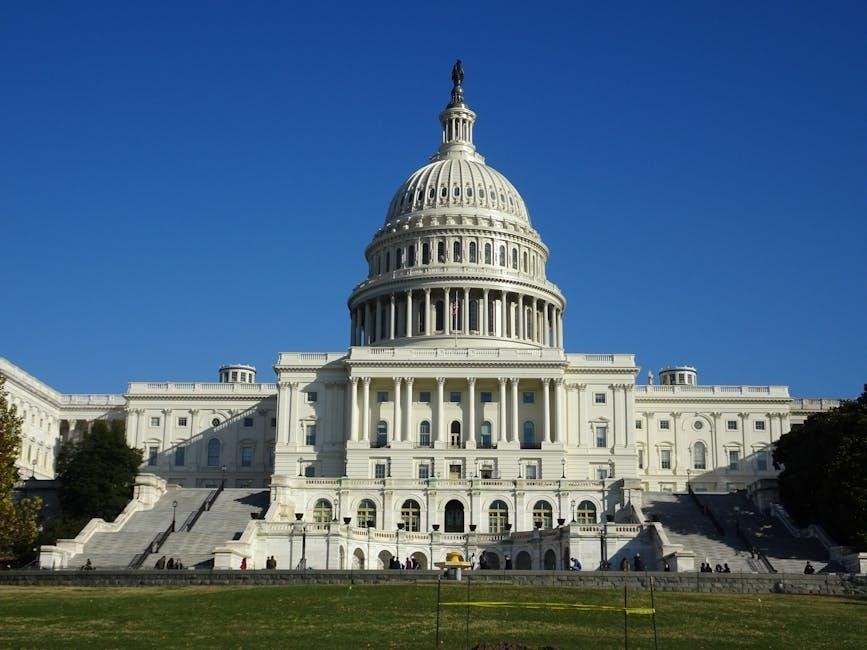
“The Logic of American Politics” (10th Edition), available as a PDF, dissects the functions of Congress, the executive branch, the judiciary, and the bureaucracy within the U.S. system.
The Role and Function of Congress
“The Logic of American Politics” (10th Edition), accessible in PDF format, provides a detailed examination of the United States Congress, exploring its multifaceted role in the American political system. The textbook meticulously analyzes the structure of Congress, including the House of Representatives and the Senate, and their respective powers and responsibilities.
It delves into the legislative process, from bill introduction to enactment, highlighting the challenges and opportunities inherent in crafting and passing legislation. Furthermore, the text investigates the influence of political parties, interest groups, and public opinion on congressional decision-making.
Gary C. Jacobson, a key author, specializes in the study of Congress, bringing considerable expertise to this section. The book explores how congressional elections and political finance impact the body’s operations and responsiveness to constituents, offering a nuanced understanding of this vital branch of government.
The Executive Branch: Powers and Responsibilities
“The Logic of American Politics” (10th Edition), readily available as a PDF, offers a comprehensive analysis of the U.S. Executive Branch, detailing its substantial powers and diverse responsibilities within the American governmental framework. The textbook meticulously examines the role of the President, from chief executive to commander-in-chief, and explores the powers vested in this office by the Constitution.
It investigates the executive branch’s influence on policy-making, including the use of executive orders, veto power, and the appointment of key officials. The authors analyze the complex relationship between the President and Congress, highlighting areas of cooperation and conflict.
Furthermore, the text explores the functions of the vast federal bureaucracy, which implements and administers policies enacted by the executive and legislative branches. This section provides a nuanced understanding of the executive branch’s central role in shaping American politics.
The Judiciary and its Impact on Policy
“The Logic of American Politics” (10th Edition), accessible in PDF format, provides a detailed examination of the American judicial system and its profound impact on policy outcomes. The textbook explores the structure of the federal courts, from district courts to the Supreme Court, and analyzes the principles of judicial review established in Marbury v. Madison.
It delves into the process of judicial decision-making, examining how judges interpret the Constitution and apply legal precedents to contemporary cases. The authors assess the influence of judicial ideology, public opinion, and political considerations on court rulings.
Furthermore, the text investigates the judiciary’s role in shaping public policy on critical issues such as civil rights, liberties, and economic regulation, demonstrating its significant power within the American political system.
The Bureaucracy: Implementation and Administration
“The Logic of American Politics” (10th Edition), available as a PDF, dedicates significant attention to the American bureaucracy – the complex network of agencies responsible for implementing and administering public policy; The textbook clarifies the structure of the federal bureaucracy, detailing its various departments, agencies, and commissions.
It analyzes the challenges inherent in bureaucratic implementation, including issues of red tape, discretion, and accountability. The authors explore the factors influencing bureaucratic behavior, such as political pressures, organizational culture, and professional norms.
Moreover, the text examines the relationship between the bureaucracy, Congress, the President, and interest groups, highlighting the constant negotiation and oversight that characterize this crucial component of the American political process.

Political Influences
“The Logic of American Politics” (10th Edition), in PDF format, thoroughly investigates how public opinion, campaigns, parties, and groups shape policy outcomes.
Public Opinion and its Measurement
“The Logic of American Politics” (10th Edition), accessible in PDF format, dedicates significant attention to understanding public opinion and the methodologies employed to measure it accurately.
The text explores the complexities of gauging citizen preferences, acknowledging that public opinion isn’t monolithic but rather a diverse collection of viewpoints.

It delves into various techniques used by political scientists, including polling, surveys, and analysis of voting behavior, to assess the distribution of opinions on key issues.
The book critically examines the potential biases inherent in these methods, such as sampling errors and question wording effects, and their impact on the validity of results.
Furthermore, it investigates how public opinion influences policymaking, political campaigns, and the broader democratic process, providing a nuanced perspective on this crucial aspect of American politics.
Students will learn how to interpret public opinion data and evaluate its significance in understanding political dynamics.
Political Campaigns and Electoral Strategies
“The Logic of American Politics” (10th Edition), readily available as a PDF, provides a detailed analysis of political campaigns and the strategies candidates employ to win elections.
The textbook examines the evolving landscape of campaign finance, exploring the role of money in influencing electoral outcomes and the regulations governing campaign contributions.
It dissects various campaign tactics, including advertising, voter mobilization, and debate performance, assessing their effectiveness in shaping public perception and garnering support.
The authors, including Gary C. Jacobson who specializes in U.S. elections, delve into the dynamics of party competition and the factors that contribute to electoral success.
Readers will gain insights into the strategic choices candidates make regarding targeting voters, framing issues, and responding to opponents’ attacks.
The book also considers the impact of media coverage and new technologies on campaign strategies, offering a comprehensive overview of modern electioneering.
The Role of Political Parties
“The Logic of American Politics” (10th Edition), accessible in PDF format, dedicates significant attention to the crucial role political parties play in the American political system.
The text explores the historical development of the party system, tracing its evolution from the early republic to the present day, and analyzing the factors that have shaped party alignments.
It examines the functions of political parties, including candidate recruitment, voter mobilization, policy formulation, and governing coalitions.
Drawing on the expertise of authors like Jacobson, a specialist in parties and elections, the book investigates the internal dynamics of parties and the challenges they face.

Readers will learn about party platforms, ideologies, and the strategies parties employ to win elections and influence policy outcomes.
The analysis extends to the impact of party polarization, the rise of third parties, and the changing role of parties in a fragmented media environment.
Interest Groups and Lobbying
“The Logic of American Politics” (10th Edition), readily available as a PDF, provides a detailed examination of interest groups and the practice of lobbying within the U.S. political arena.
The textbook dissects the diverse landscape of interest groups, categorizing them by their goals, membership, and methods of influence, and explaining how they attempt to shape public policy.
It explores the various lobbying techniques employed by interest groups, including direct lobbying, grassroots mobilization, campaign contributions, and litigation.
Drawing on scholarly insights, the book analyzes the factors that contribute to the success or failure of interest group lobbying efforts.
Readers will gain an understanding of the regulations governing lobbying activities and the ethical considerations surrounding interest group influence.
The text, informed by experts like Jacobson, delves into the impact of money in politics and the role of political action committees (PACs) in shaping electoral outcomes.
The Media’s Influence on American Politics
“The Logic of American Politics” (10th Edition), accessible in PDF format, dedicates significant attention to the pervasive influence of the media on American political processes.
The textbook analyzes the evolving role of media – from traditional news outlets to social media platforms – in shaping public opinion, framing political debates, and influencing electoral outcomes.
It examines how the media functions as a gatekeeper, agenda-setter, and watchdog, scrutinizing the actions of political actors and holding them accountable.
The book explores the challenges of media bias, the rise of “fake news,” and the impact of partisan polarization on media coverage.
Readers will learn about the relationship between the media and political campaigns, including the use of advertising, earned media, and social media strategies.
The analysis, drawing on current research, considers how the media landscape impacts citizen engagement and democratic participation, as of May 5th, 2026.

Key Themes and Omissions
“The Logic of American Politics” (10th Edition), in PDF form, centers on core themes, yet notably omits a dedicated chapter on federalism and state-federal interactions.
Federalism and Intergovernmental Relations (Potential Omission)

A significant observation regarding “The Logic of American Politics” (10th Edition), accessible in PDF format, is the apparent lack of a dedicated chapter explicitly addressing federalism and the complex dynamics of intergovernmental relations.
While the text undoubtedly touches upon aspects of the Constitution’s framework and the division of powers, a comprehensive exploration of the ongoing interactions between federal, state, and local governments seems to be absent.
This omission is noteworthy given the crucial role federalism plays in shaping American politics, policy implementation, and the distribution of resources.
The absence of a focused chapter might be considered a limitation for students seeking a thorough understanding of this foundational element of the U.S. political system, despite the book’s overall strengths.
Further research and supplemental materials may be necessary to fully grasp the nuances of federal-state relationships.
The Study of U.S. Elections
“The Logic of American Politics” (10th Edition), available as a PDF, dedicates substantial attention to the intricate study of U.S. elections, recognizing their central role in the American political process.
The text delves into the electoral origins of political outcomes, examining how factors like voter behavior, campaign strategies, and party dynamics influence election results.
Gary C. Jacobson, one of the authors, specializes in this very field, bringing expertise in U.S. elections, parties, interest groups, public opinion, and the workings of Congress.
The book analyzes the forces shaping voter choices, the impact of money in congressional elections, and the evolving landscape of electoral competition.
Students gain insights into the complexities of campaigning, the role of political finance, and the broader implications of elections for policy and governance.
Congressional Elections and Political Finance
“The Logic of American Politics” (10th Edition), accessible in PDF format, provides a detailed examination of congressional elections and the pervasive influence of political finance within them.
The textbook explores the dynamics of candidate emergence, campaign fundraising, and the role of money in shaping electoral outcomes, offering a nuanced perspective on this critical aspect of American politics;
Drawing on the expertise of authors like Gary C. Jacobson, renowned for his work on congressional elections, the book analyzes the impact of financial resources on campaign competitiveness and electoral success.
It investigates the sources of campaign funding, the regulations governing political finance, and the potential for financial influence to distort the democratic process.
Readers will gain a comprehensive understanding of the challenges and complexities surrounding money in politics and its implications for representation and policy-making.

Availability and Formats
“The Logic of American Politics” (10th Edition) is readily available as a PDF download, alongside convenient print editions bearing ISBNs 9781071839805 and 9781071861257.
Accessing the PDF Version
“The Logic of American Politics” (10th Edition) in PDF format can be accessed through various online platforms, notably the Internet Archive, offering free download, borrowing, and streaming options. This accessibility makes the text a valuable resource for students and researchers seeking cost-effective learning materials.
However, users should be aware of potential copyright restrictions and adhere to the terms of service of each platform. The Internet Archive record (urn:oclc:record:1245528206) provides a direct link to the digital version, while other academic databases or online bookstores may also offer the PDF for purchase or rental.
Ensure a stable internet connection for seamless downloading and viewing. The PDF version retains all the content, including figures, tables, and the index, mirroring the print edition’s comprehensive coverage of American politics. Always verify the source’s legitimacy to avoid encountering corrupted files or malware.
Print Editions and ISBNs (9781071839805, 9781071861257)
“The Logic of American Politics” (10th Edition) is readily available in print through major booksellers like Amazon.com. Two distinct ISBNs identify specific editions: 9781071839805 and 9781071861257. While both represent the 10th edition, variations in cover design or bundled materials might exist, so confirm details before purchasing.
The print editions offer a tactile learning experience, beneficial for annotation and focused study. Amazon provides detailed product descriptions and customer reviews to aid in your selection. Though a PDF version exists for digital convenience, many students and instructors prefer the traditional format for in-depth engagement with the text.
Consider the cost and shipping options when choosing between the ISBNs. Both versions contain the same core content, covering U.S. political institutions, processes, and influences, as detailed in the Internet Archive’s description.